


08 Jan Tooth Infection vs. Cavity: How to Tell What’s Causing Your Tooth Pain
Tooth Infection vs. Cavity: How to Tell What’s Causing Your Tooth Pain
A toothache has terrible timing. It shows up when you’re trying to sleep, mid-meeting, or the second you bite into something crunchy. And because tooth pain can feel similar across a bunch of dental problems, it’s easy to guess wrong about what’s actually going on.
Two of the most common culprits are a cavity (tooth decay) and a tooth infection (often an abscess). Both can cause a toothache, sore teeth, and that “my tooth hurts and I can’t focus” feeling, but they’re not the same issue, and the urgency can be very different. Tooth decay may start quietly and build over time, while an infection can progress and sometimes spread if it isn’t treated promptly.
This guide breaks down the signs that point to a cavity vs a tooth infection, what it means when pain in teeth and jaw shows up, and what to do for tooth pain relief while you line up proper care. If you need help in person, True Dental is your West Kelowna dentist for getting to the root of the problem (and getting you out of that toothache cycle).
Tooth Infection vs. Cavity: The Key Differences in Tooth Pain
A cavity is damage that begins on the outer surface of the tooth and moves inward. A tooth infection usually means bacteria have gotten into deeper tooth structures or around the root, creating a pocket of infection otherwise known as an abscess.
Here’s how the “feel” often differs:
- Cavity pain often starts as sensitivity (cold, sweet, sometimes heat), then becomes more consistent as decay gets deeper.
- Infection pain is more likely to be intense, throbbing, and persistent, and it may come with gum pain, swelling, or a bad taste from drainage.
- if your toothache is mild and triggered mainly by cold or sweets, a cavity is a strong possibility. If your toothache is constant, pulsing, waking you up, or paired with swelling, a tooth infection climbs higher on the list.
Also worth knowing: both problems can overlap. A deep cavity can irritate the nerve, and if bacteria reach the pulp, that same tooth can become infected.
Do Cavities Hurt? Early vs. Advanced Cavity Symptoms
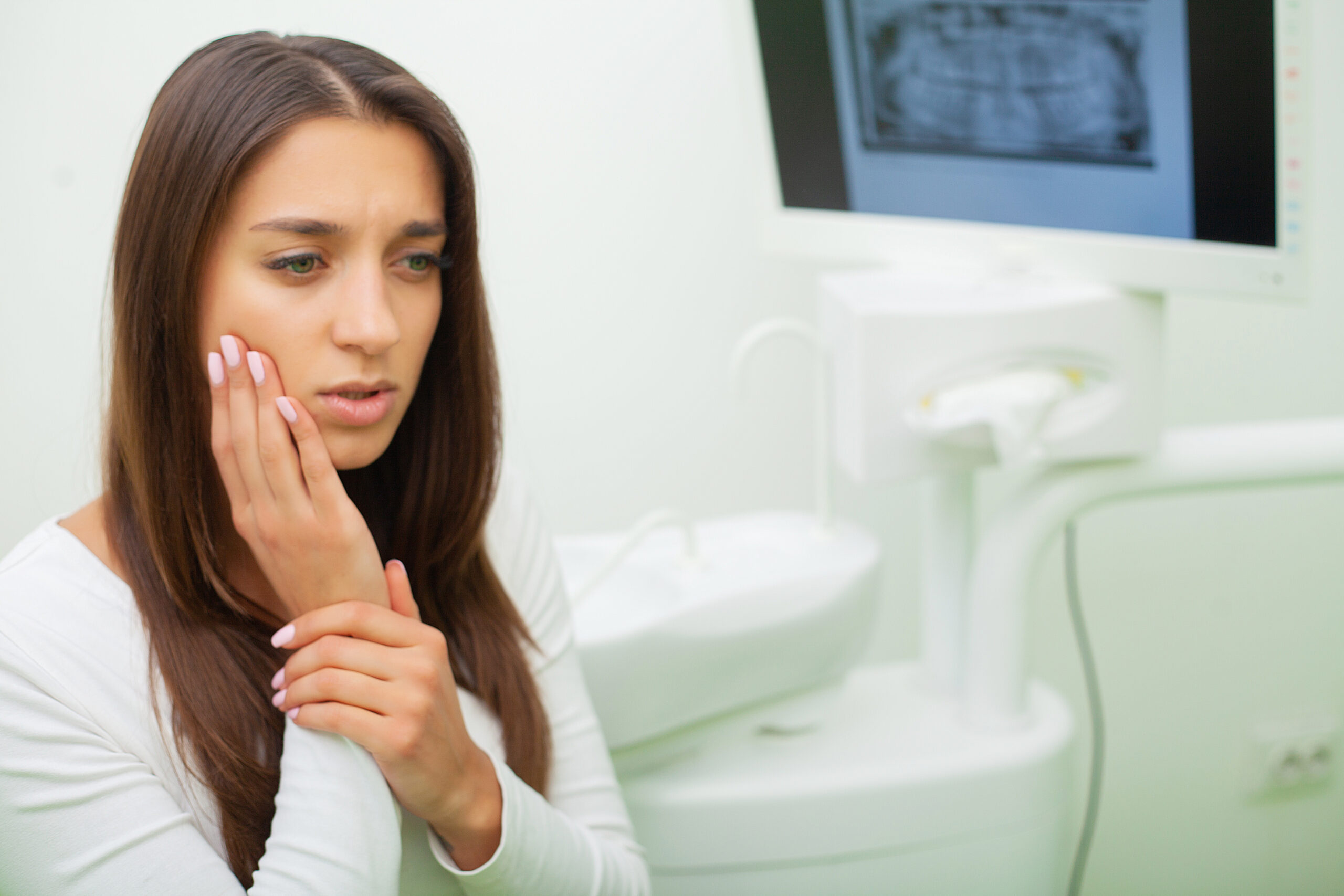
Do cavities hurt? They can, but not always at the start. In early decay, you might only notice mild sensitivity or occasional sore teeth. As tooth decay progresses, pain tends to become more obvious, more frequent, and easier to trigger.
Early cavity signs often look like this:
- Brief sensitivity to cold drinks or sweet foods
- A light toothache that comes and goes
- One spot that feels “off” when you floss
- Teeth hurt moments that disappear quickly after eating
Advanced cavity signs can look like this:
- Tooth pain that lingers after hot, cold, or sweet foods
- Pain when biting or chewing (your tooth hurts under pressure)
- A visible pit, rough spot, or dark area on the tooth
- A toothache that’s showing up daily, not just occasionally
If your teeth hurt when chewing, don’t assume it’s “just sensitivity.” Cavities and cracks can both cause sharp pain on bite, and both are easier to fix when caught early.
Signs Your Toothache Could Be a Tooth Infection

A tooth infection often produces a bigger, more severe set of symptoms than a routine cavity. The toothache can feel deep, throbbing, and hard to ignore, and it may spread into nearby areas of the face or jaw.
Common signs include:
- A strong toothache that doesn’t settle down
- Gum pain with swelling, tenderness, or a bump that looks like a pimple
- Sensitivity that’s severe (not just a quick twinge)
- A bad taste in the mouth or drainage
- Feeling generally unwell (in more serious cases)
Sometimes the toothache seems to improve suddenly. That does not always mean the problem is gone. In some cases, the nerve inside the tooth may be badly inflamed or damaged, and symptoms can change even while infection remains. This is one reason dentists recommend prompt evaluation when infection is suspected.
When it becomes urgent:
If you have facial swelling and fever, or you have trouble swallowing or breathing, seek emergency care. Those can be signs the infection is spreading beyond the tooth. Also, antibiotics are not usually the first-line solution for most localized dental pain and swelling. Dental treatment that removes the source (like drainage or root canal treatment) is typically the priority, with antibiotics recommended when there are signs of systemic involvement such as fever or malaise.
Pain in Teeth and Jaw: When Tooth Pain Becomes Jaw Pain
Pain in teeth and jaw can feel alarming, but it’s fairly common when tooth pain escalates. The nerves in your face and jaw can “share” signals, so one irritated tooth can cause jaw discomfort that feels like it’s coming from multiple places.
Jaw pain from tooth issues often happens because:
- You’re clenching or holding tension due to discomfort
- You’re chewing differently to protect the sore side
- Inflammation around a tooth root is irritating nearby tissues
Signs it’s likely dental-related:
- Your jaw pain from tooth discomfort worsens when you bite or chew
- You can point to a specific tooth that hurts
- The pain is paired with a Toothache, gum pain, or swelling
- The discomfort radiates from one area rather than both sides evenly
It’s also possible for jaw discomfort to come from non-tooth causes (like TMJ issues or muscle strain). But if you’re getting pain in teeth and jaw together, especially with a Toothache that’s increasing, that’s your cue to book a dental exam and avoid guessing.
Tooth Pain Relief at Home: Toothache Remedies (and When to Call a West Kelowna Dentist)

Let’s talk survival mode. When you have a toothache, you want tooth pain relief now, not “eventually.” Home steps can help you cope temporarily, but they are not a replacement for diagnosing the cause, especially if a tooth infection is possible.
Toothache remedy options that can help short term:
- Rinse gently with warm salt water to soothe irritated gums
- Use a cold compress on the cheek if there’s swelling
- Keep the area clean with gentle brushing and careful flossing
- Avoid extreme temperatures (ice-cold drinks, very hot coffee) if they trigger tooth pain
- Follow over-the-counter pain relief directions on the label (and check with a pharmacist if you have medical conditions or take other medications)
A few “please don’t” notes that matter:
- Don’t place aspirin directly on gums or the tooth. It can irritate soft tissue.
- Don’t ignore swelling. Swelling plus toothache can signal infection and needs prompt assessment.
- Don’t rely on antibiotics you have at home or leftovers from someone else. Dental antibiotics should be prescribed appropriately, and dental treatment is usually needed to resolve the source.
When to call a West Kelowna dentist
- Your toothache lasts more than 2 days
- Painkillers aren’t touching the toothache
- You have a bad taste in your mouth, red or swollen gums, or pain when you bite
- Your cheek or jaw is swollen (jaw pain from tooth pressure counts here too)
If you’re thinking, “My tooth hurts, but I don’t want to overreact,” here’s the honest truth: it’s almost always faster (and easier) to treat tooth pain early than to wait until it becomes a bigger problem.
What to expect when you visit True Dental
A good diagnosis is the difference between chasing symptoms and actually fixing the cause.
At True Dental, your West Kelowna dentist team will typically:
- Ask questions about how the Toothache started, what triggers it, and whether your teeth hurt with hot/cold or chewing
- Examine the tooth, gums, and bite for visible decay, cracks, and gum pain
- Take X-rays to check for cavities, deep decay near the nerve, or signs of infection near the root
- Recommend the right treatment based on what’s found (for example, a filling for a cavity, or treatment to address infection such as drainage and root canal therapy where appropriate)
If you’re stuck in a toothache loop, don’t wait for it to “declare itself.” Get it checked, get answers, and get relief. If you’re dealing with tooth pain, gum pain, sore teeth, or pain in teeth and jaw, book an appointment with True Dental today.