


09 Nov Teeth Grinding & Night Guards in West Kelowna
Waking up with a stiff jaw, a dull headache at your temples, or teeth that feel strangely tender is easy to brush off. Most people blame a bad sleep and move on. But when those mornings keep adding up, teeth grinding is often the hidden cause. It tends to get worse during busy, high-stress stretches like the lead-up to the holidays. Because so much of it happens while you’re asleep, many people have no idea they grind until a partner hears it or a dentist spots the wear. This guide from True Dental explains how to recognize bruxism, what drives it, how a custom night guard protects your teeth, and which other treatments can help your jaw finally relax.
When Your Teeth Hurt in the Morning: Common Signs of Teeth Grinding
Bruxism is the clinical name for clenching or grinding your teeth, or bracing your jaw, without meaning to. Your jaw muscles are some of the strongest in your body. When you’re grinding teeth in sleep, they can press your teeth together with real force, often for longer stretches than you would ever spend chewing.
If your teeth hurt and you’re not sure why, watch for these signs of teeth grinding:
- A sore, tight or tired jaw when you wake up, or jaw pain that eases as the day goes on
- Dull morning headaches, especially around the temples
- Teeth that look flatter, shorter, chipped or worn along the edges
- New sensitivity to hot, cold or sweet foods as enamel wears thin
- A grinding or clicking sound at night that a partner or family member notices
- Scalloped edges along the sides of your tongue, or a raised line along the inside of your cheek
Because these symptoms come and go, teeth grinding at night is easy to dismiss. Over time, though, the steady pressure can crack teeth, break fillings, loosen crowns and wear enamel down to the softer layer underneath. That kind of damage is much harder to fix than to prevent. Some symptoms shouldn’t wait: get prompt care if a tooth suddenly hurts when you bite down, a piece of tooth breaks off, or your jaw locks open or closed. Our emergency dentistry team can help.
What Causes Bruxism? Sleep Bruxism vs. Daytime Jaw Clenching
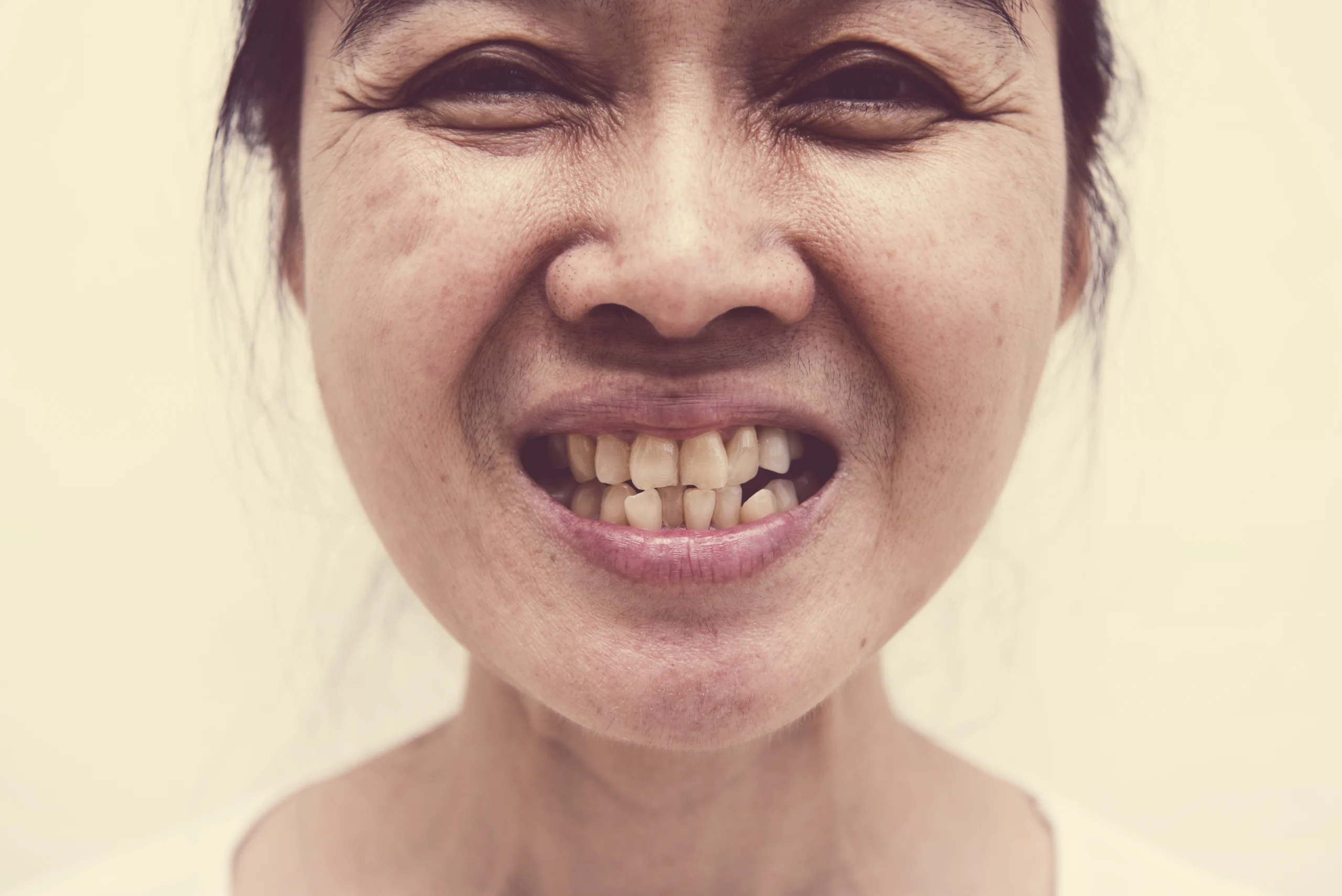
Bruxism shows up in two ways. Bruxism experts now recommend separate definitions for sleep bruxism and awake bruxism, since they are generally seen as different behaviours. Sleep bruxism happens while you’re asleep and usually involves rhythmic grinding or clenching. Awake bruxism is more often silent jaw clenching during the day: while you concentrate at a screen, drive in traffic, lift weights or reread a stressful email. Many people do both.
Research has linked teeth grinding to several common factors:
- Stress and anxiety, especially around deadlines and the holidays
- Caffeine, alcohol and tobacco, particularly later in the day
- Snoring and obstructive sleep apnea
- Some medications, including certain antidepressants
- Acid reflux
- Grinding as a child
Sleep apnea deserves a closer look. If you grind and also snore loudly, wake up gasping, or feel exhausted after a full night in bed, mention it at your appointment. Your dentist may suggest a sleep assessment through your family doctor, since treating a breathing problem can matter more than protecting your teeth alone.
Children grind too, often while new teeth are coming in, and many outgrow it. Mention it at your child’s next checkup so we can rule out wear or discomfort. If you’re looking for a family-friendly practice, see our guide to finding the right children’s dentist in West Kelowna. Because bruxism rarely has a single cause, the best plan usually protects your teeth while easing whatever is driving the clenching.
Inside the Appointment: How a Custom Night Guard for Teeth Grinding Is Made

For most people, the first line of defence is a night guard for teeth grinding. This is a thin, custom-fitted appliance that sits over your upper or lower teeth while you sleep. It won’t necessarily stop the urge to grind, but it gives your teeth a protective barrier and can ease the load on your jaw joints and muscles.
Here’s what to expect when you get a custom night guard:
Exam and assessment: Your dentist checks for wear patterns, cracks, gum recession, jaw tenderness and the way your bite comes together. X-rays may be taken to look for hidden damage.
Impressions or a digital scan: We capture a precise model of your teeth so the guard matches your bite.
Fitting and adjustments: When your guard is ready, we make sure it feels snug but comfortable and fine-tune the surface so your jaw can rest evenly.
Follow-up: A quick recheck confirms it’s working, and we’ll look at the guard during your regular checkups for signs of wear.
Drugstore boil-and-bite guards can seem like an easy shortcut, but they’re usually bulkier, looser and less durable. A poor fit can make a guard hard to keep in all night, and some people find that soft, chewy material makes them clench even more. A custom night guard is designed around your mouth, so it’s more comfortable to wear and more likely to last. Most patients get used to sleeping with one within a week or two.
Bruxism Treatment Beyond the Night Guard: Ways to Ease Jaw Clenching

A night guard protects your teeth, but effective bruxism treatment also looks at why your jaw is working overtime. Depending on what’s behind your teeth grinding, your plan may include:
Dental Botox: For stubborn clenching and jaw pain, small injections can relax overworked chewing muscles for several months at a time. Learn more in our guide to Botox for TMJ.
Repairing worn teeth: Bonding, crowns or new fillings can rebuild chipped or flattened teeth once the grinding is under control.
Sleep support: If snoring or sleep apnea may be involved, a sleep assessment can get to the root of the problem.
Stress relief: Regular exercise, a wind-down routine before bed and slow breathing can all lower muscle tension.
Finding the Right West Kelowna Dentist for Teeth Grinding Treatment
Teeth grinding rarely goes away on its own, and the damage it causes builds quietly. If you’re comparing West Kelowna and Peachland dentists, look for a team that examines your teeth and jaw closely, explains what’s causing your symptoms in plain language, and offers more than one way to treat bruxism, from a custom night guard to options like dental Botox. At True Dental, our goal is to treat every patient like a member of our own family, which means listening first and building a plan that fits your life. If your teeth hurt in the morning or you suspect you’re grinding at night, contact us to book an appointment. We’ll take a look, answer your questions, and help you protect your smile for the long run, with no pressure.